Sandipani Muni Gurukul, Nashik — Holistic Vidya Rooted in Indian Tradition & Character Building
Our Heritage & Purpose

About Sandipani Muni Gurukul

Who we are, why our Gurukul exists, and our commitment to society in Nashik.

Our Genesis

Our Story

Inspired by the ancient Gurukul of Maharshi Sandipani—where Sri Krishna and Sudama learned together without distinction of status—Sandipani Muni Gurukul was established in Nashik, Maharashtra.

We observed that modern schooling had largely turned into an industrial conveyor belt focusing strictly on marks, rote learning, and fee-driven commercialization. We founded this institution to bring back the sacred dignity of learning where character, physical vitality, Sanskrit heritage, and practical skills are nurtured side-by-side.
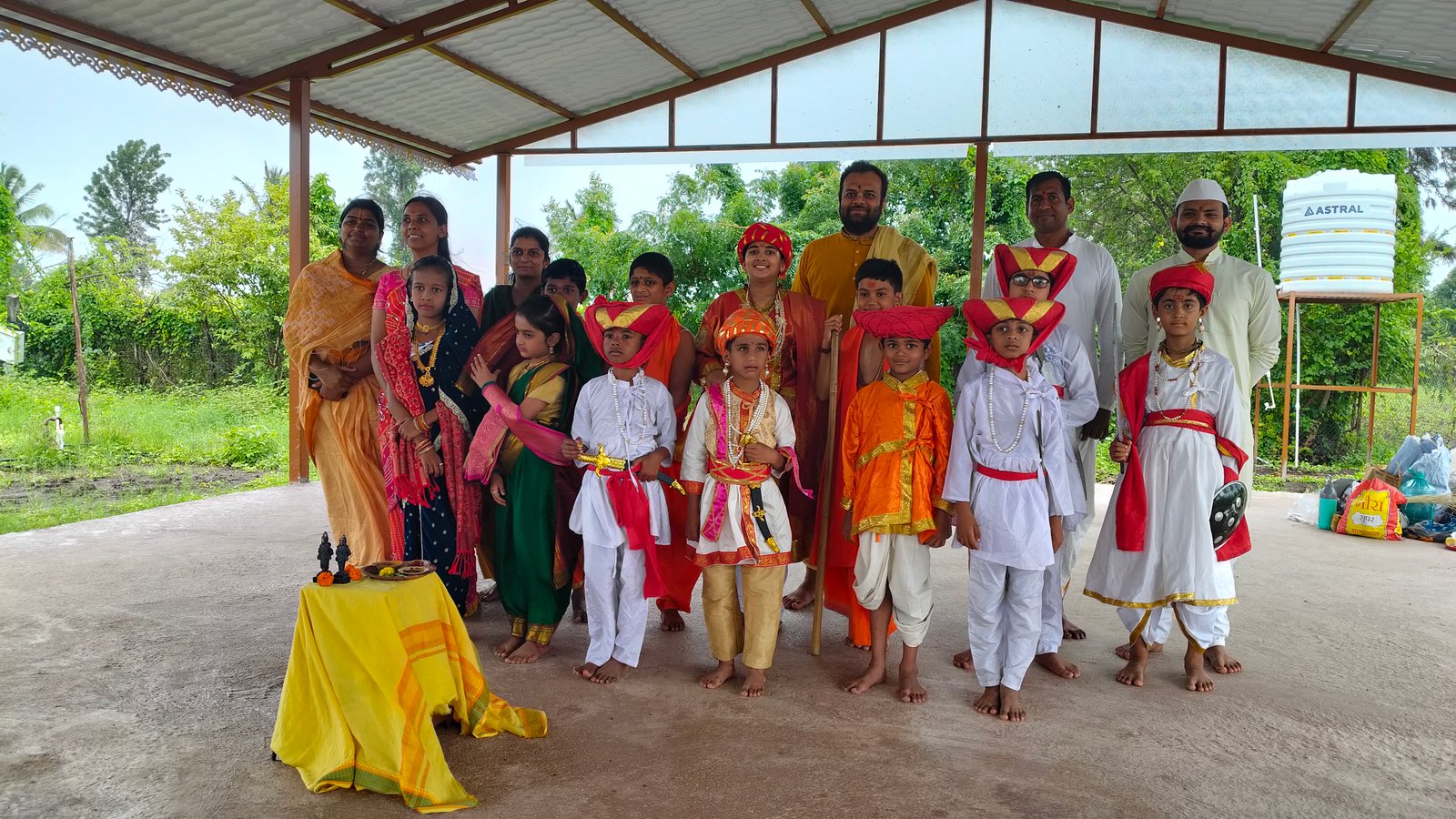
Indian Traditional Learning

Our Vision

To raise courageous, humble, intellectually brilliant, and spiritually grounded human beings who contribute selflessly to society while remaining rooted in Bharatiya Sanatana values.

Our Mission

To provide completely fee-free, multi-dimensional education that synthesizes rigorous academic study, Sanskrit heritage, physical disciplines (Lathi-Kathi, Yagya, Sports), and practical arts (Pottery, Craft).

Education Without Fees

In Bharatiya tradition, commercializing knowledge (selling Vidya) is considered a distortion. Education is a sacred responsibility of society to its next generation. Therefore, Sandipani Muni Gurukul charges no tuition fees.

Instead, the Gurukul operates on the timeless principles of Daan (Voluntary Giving) and Bhiksha (Community Sustenance). Society supports the institution through grain, books, equipment, and financial contributions, ensuring that every child, regardless of economic background, sits together in equal dignity.

Located in Nashik, Maharashtra — Godavari River Basin Valley
Foundational Philosophy

Our Six Pillars

The timeless core values that define the identity of Sandipani Muni Gurukul.

समिधा
Samidha • Fueling the Inner Flame

Literally referring to the sacred wood offered into the Yagya fire. Spiritually, Samidha represents fueling the child's inner flame of curiosity, self-discipline, and enthusiasm for wisdom.

Practiced at Gurukul: Daily self-study, early morning awakening, and targeted academic focus.
समीक्षा
Samiksha • Critical Enquiry & Discernment

Deep observation and critical thinking. Rather than swallowing information blindly, children are taught to question, analyze, observe nature, and verify truth through direct experience.

Practiced at Gurukul: Science experiments, practical math problem solving, and reflective evening dialogues.
समित्पाणि
Samitpani • Humility & Receptivity

Carrying sacred twigs in hand while approaching the Guru, symbolizing complete humility and freedom from ego. Knowledge can only enter a vessel that is humble and eager.

Practiced at Gurukul: Respectful interaction with Acharyas, peers, elders, and environmental care.
दान
Daan • Selfless Contribution

The spirit of voluntary giving. Children learn that whatever talent, strength, or knowledge they possess must be shared generously for the benefit of the community.

Practiced at Gurukul: Community service, sharing meals, maintenance of campus grounds, teaching younger peers.
भिक्षा
Bhiksha • Interdependence & Ego Eradication

Understanding that human beings cannot survive in isolation. Seeking support from society instills profound humility and destroys social arrogance or elitism.

Practiced at Gurukul: Receiving community offerings, participating in village food drives, and respecting all labor.
गुरुदक्षिणा
Guru Dakshina • Lifelong Tribute of Excellence

Guru Dakshina is not a commercial fee; it is the ultimate offering of an honorable, noble, and impactful life back to the teachers and society that educated the child.

Practiced at Gurukul: Lifelong pledge to uphold truth, serve India, and lead an ethical life.
Action completed successfully!